HANGOVER & CHATGPT
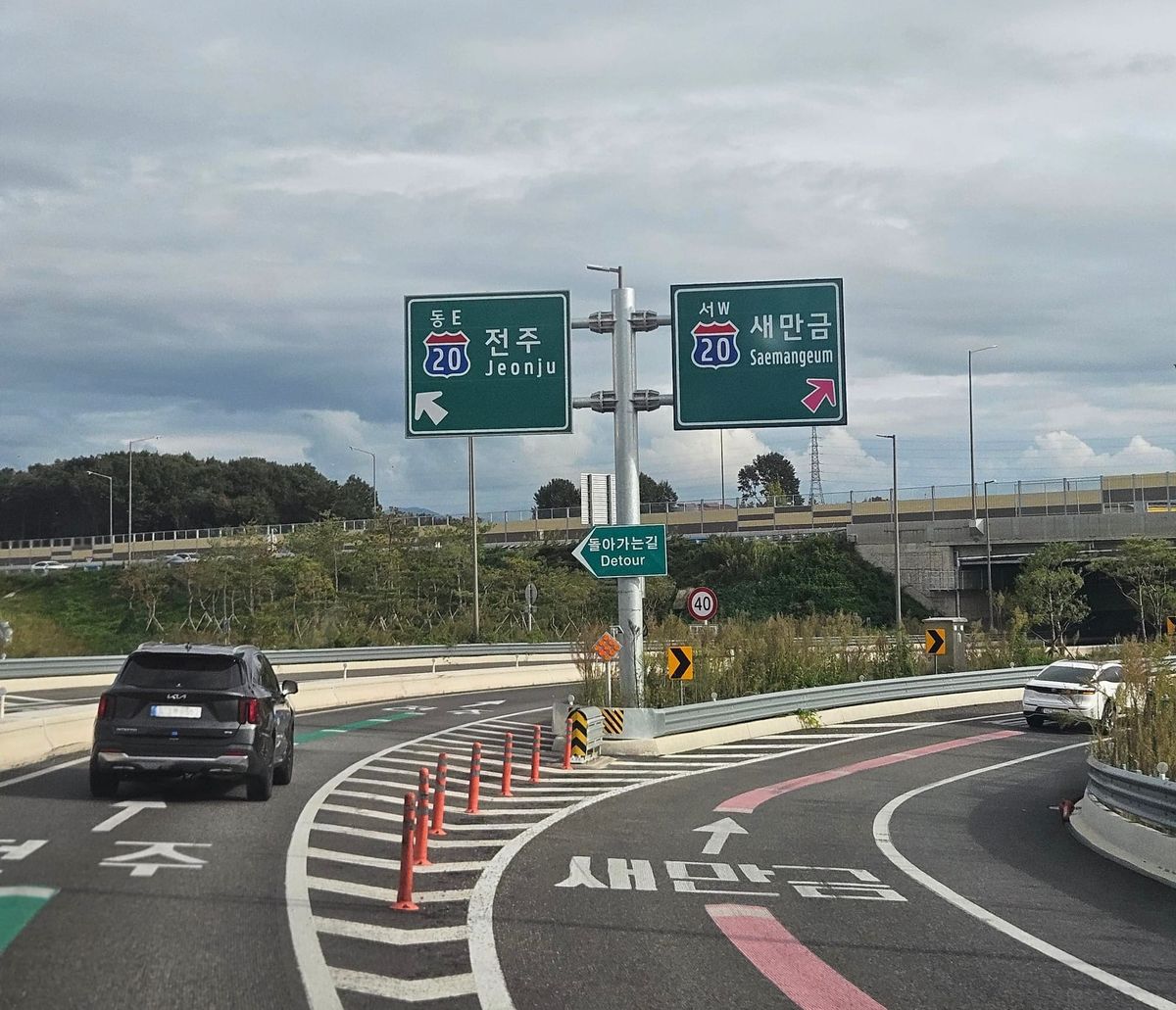
Some conversations begin with a simple question and end somewhere between the Big Bang, the impermanence of life, and the question of why we exist in the first place. This one began after a long night at a nightclub with my legendary party uncle. We still had about a two-hour drive ahead of us to visit my grandmother, whom I had not seen in a while. The car’s air conditioning made the summer drive along the highway more comfortable.My body was still busy dealing with the consequences of the previous night, while my mind was apparently profound questions about life and the mysteries of the universe.
My first idea was about business. There are plots of land near my grandmother’s place whose prices seem relatively attractive. I had been thinking about Bitcoin mining for quite some time. What if I bought a plot of land, installed solar panels or wind turbines, and used the electricity to power Bitcoin miners? But the more I looked into it, the clearer the problems became. The mining machines and the whole infrastructure of energy and cooling systems would be an expensive investment to make, and I would take up my time, my attention and my energy I don’t have. On top of that the price of Bitcoin goes up and down. What could go wrong, right? But not this time. Im 33 years old. In the end, I came to the conclusion that, for my own goals, it would probably make more sense to buy Bitcoin directly and hold it for the long term. That should have been the end of the discussion, but indeed it sounds a lot more better to “own bitcoin miners” with green energy..
Because my toe was hurting, I started asking a different question: Can you get gout in your early thirties? The answer is yes. Gout happens when there is too much uric acid in the blood. This can cause tiny crystals to build up in the joints. The joint at the base of the big toe is a common place for this to happen. Your genes, alcohol, certain foods, and how well your kidneys remove uric acid can all affect the risk. The human body is an amazing system. Billions of cells work together, and our organs do incredibly complex jobs. Yet one tiny crystal can make walking painful. But by this point, my toe was no longer the most interesting part of the conversation. What fascinated me was how quickly my thoughts jumped from one subject to another. Outside, the South Korean countryside was passing by the car window.
During the drive, I noticed how hot it was. Temperatures had reached very high levels again, and some lakes looked much lower than I remembered.I started thinking about climate change. Not because I wanted to deny it. I was interested in a more fundamental question: If lakes dry up and some areas become drier, where does all that water actually go? It evaporates, rises into the atmosphere as water vapor, condenses into clouds, and eventually falls back to Earth as precipitation. Higher temperatures change this cycle. One important scientific rule is described by the Clausius-Clapeyron equation. In simple terms, warmer air can hold about seven percent more water vapor for every degree Celsius of warming, under similar conditions. In the right conditions, this can lead to heavier rainfall. At the same time, some places can become drier if more water evaporates and not enough rain falls. That led me to another question. If the climate has always changed, how do we know that humans are causing the warming we see today?
Our planet has a long history of climatic changes. There have been ice ages and warmer periods, volcanic eruptions, changes in Earth’s orbit, and changes in the Sun’s activity. All of these can affect the climate. Since the beginning of the Industrial Revolution, the global average temperature has increased by approximately 1.2 to 1.3 degrees Celsius compared with pre-industrial levels, depending on the period and dataset being considered. The scientific evidence shows that human greenhouse gas emissions are responsible for most of the long-term warming we are seeing now. Ice cores from Antarctica contain tiny air bubbles that allow scientists to reconstruct the composition of the atmosphere over hundreds of thousands of years, long before humans, cities, or entire civilizations existed. When you think about it, that is almost absurd. We live in a time when humans can reconstruct our planet's past from frozen bubbles of air. And yet we still argue about whether we should even listen to the scientific evidence.Perhaps this is one of the greatest contradictions of our species: we have the ability to understand an incredible amount, but we are not always willing to accept the consequences, especially when money and our own interests are involved.
I hate flying. And yet I often find myself sitting in an airplane traveling at around 900 kilometers per hour. But that speed is almost nothing compared with the movement of our planet. At the equator, Earth’s surface spins at about 1,670 kilometers per hour. Earth travels around the Sun at roughly 107,000 kilometers per hour. And our solar system moves around the center of the Milky Way at several hundred thousand kilometers per hour. And what am I doing while all this is happening? I am sitting in a car, drinking coffee, looking out the window, and talking to AI about the universe and life.
The universe is not exactly a comfortable place. There is strong radiation, extreme heat and cold, and countless pieces of rock moving through space. Yet we can live on Earth without having to worry about these dangers every moment. Our atmosphere blocks much of the harmful ultraviolet radiation, and many small space rocks burn up as they enter it. The streaks of light we call shooting stars are the result of this process. Earth’s magnetic field is created by movement in its liquid outer core. It pushes away many charged particles coming from the Sun and helps protect our atmosphere. Earth formed about 4.54 billion years ago. Since then, continents have moved, oceans have formed, the atmosphere has changed, and living things have evolved. Eventually, some of those living things became able to think about their own existence. The Sun contains about 99.86 percent of all the mass in our solar system. Its diameter is about 400 times greater than the Moon’s. But the Sun is also about 400 times farther away from Earth. That is why the Sun and the Moon appear to be almost the same size in the sky.
From Bitcoin to the human body, from water to the climate, from Earth to the Sun, and finally to the stars. The longer I thought about it, the more I noticed a common idea running through all these topics. The world we know is not a finished product. It is an ongoing process of formation, change, and dissolution. And we are part of that process. The carbon in our cells, the calcium in our bones, and the oxygen we breathe are all part of a story that began billions of years ago. We are literally made of material whose origins lie in the history of the universe. We are stardust. It sounds poetic, but there is real science behind it. But if everything is temporary, what value do our experiences really have?
One day, our Sun will reach the end of its current life. It will grow into a red giant and later release its outer layers. What remains will be a white dwarf. The universe offers no guarantee that anything will last forever. So why do we humans so often expect our own lives to be different? We want the people we love to stay with us forever. We want beautiful moments to never end. We want relationships to stay the same, and somehow, we want to stop time. But life does not work that way. Our bodies change. People come and go. Feelings change, memories change, and things we take for granted today may already be in the past tomorrow. At first, that thought hurts. But perhaps that is precisely where part of life's meaning lies. A summer day is precious because it does not last forever. A conversation with someone we love matters because we cannot have an endless number of those conversations. A hug, a shared laugh, or a moment when we are simply happy can never be repeated in exactly the same way. If everything lasted forever and never changed, we might see time differently. Perhaps we would feel less longing, less need to act now, and a different need to hold on to the things we care about. I do not believe that every loss is beautiful or that every change is good. Some things in life are simply bittersweet and sad. But just because something does not last forever does not mean it was worthless. Quite the opposite: knowing that something will not last forever can remind us to pay closer attention, live more consciously, and stop taking the people around us for granted.
Perhaps life is not valuable because it lasts forever. Perhaps it is valuable even though it does not.
While all these thoughts were running through my head, I was still sitting in the car. It was hot. The air outside seemed almost motionless. The landscape continued to pass by, and we were still on our way to my grandmother's place. I had started with an idea about Bitcoin mining and somehow ended up thinking about gout, climate change, Earth’s rotation, the birth of stars, and the fact that life does not last forever. I am a human being on a small planet that has been moving through space for billions of years. My body is made of atoms, some of which existed before Earth itself. I can think about all of this, ask questions, and try to understand how everything is connected. And at the same time, I am just a person sitting in a car after a long night out, dealing with a painful toe and hoping my hangover will go away soon. Perhaps that is what makes being human interesting. We are not separate from this world. We are part of it.
Sometimes, all it takes is looking out the window and noticing where you are. Not in some abstract thought experiment, but right here. On this day. In this car. On this planet. Perhaps that is already enough to make us stop and think for a moment. And what was ChatGPT’s final recommendation? Enjoy the 36-degree heat, drink plenty of water, and take care of yourself. After a philosophical journey from my big toe to the edge of the universe, artificial intelligence had apparently decided that my main problem might simply be dehydration. Perhaps it was right. What an irony. Sometimes, you do not need answers to life’s biggest questions. Sometimes, you just need to drink some water and enjoy the moment.